|
Managing Tasks When you Live With Chronic Pain.
We all do it, come out of a flare, feel good for a few days and then over do things.Here are a few tips to manage your work load while preventing a major flare.
Organize
Prioritize
Distribute
Alternate
Pace yourself
Delegate
Duplicate
In the kitchen
Around the house
Outside
 Cooking dinner. Mowing the lawn. Mopping the floor. Though they may seem minor, everyday tasks can take a toll on your body. And when you suffer from chronic pain and fatigue, running a household can seem like an overwhelming job. The biggest mistake many people make is trying to do everything at once, according to Olga Anderson, an occupational therapist at Mayo Clinic, Rochester, Minn. Cooking dinner. Mowing the lawn. Mopping the floor. Though they may seem minor, everyday tasks can take a toll on your body. And when you suffer from chronic pain and fatigue, running a household can seem like an overwhelming job. The biggest mistake many people make is trying to do everything at once, according to Olga Anderson, an occupational therapist at Mayo Clinic, Rochester, Minn.
"It's a cycle - they do too much, then they become over-fatigued or cause a flare. Once their energy is back and the pain is gone, they try to make up for lost time - and then they get fatigued again and have another flare," says Anderson. The good news is that you can take many steps to make the work in and around your home easier to manage. The key is to follow these guidelines:
Organize
By planning ahead you can organize your tasks in ways that will conserve energy. For instance, clean one area or floor at a time. If you're doing laundry in the basement, combine tasks that can be done there to avoid hikes up and down the stairs.
Ask yourself: How many tasks can I realistically accomplish in this room or on this floor without causing a flare or becoming over-fatigued?
Back to Top
Prioritize

Accept the fact that you will not be able to get everything done in one day. Decide which are the most important tasks to accomplish and focus on them. Other items can wait until another time Ask yourself: What chores really have to be done now? And what tasks can be delayed?
Back to Top
Distribute
Break tasks into smaller segments that can be accomplished over a number of days. For example, carrying laundry can strain your joints. When clothes are wet, they can be heavy and hard to maneuver into the dryer. And if your washer and dryer are in your basement, you can spend a lot of time running up and down the stairs.
To ease the strain, do a load of laundry every other day instead of all in one day. Alternately, set time limits for yourself. For instance, clean the closet for 30 minutes each day until the job is done.
Ask yourself: How can this job be spread over a number of days?
Back to Top
Alternate
 Two ways to alternate tasks are: Light, medium, light tasks. Alternate light tasks with medium tasks. If you do a heavy task, plan on taking a break after completing it and follow it up with a lighter task. This gives your body a break and allows you to work longer. Two ways to alternate tasks are: Light, medium, light tasks. Alternate light tasks with medium tasks. If you do a heavy task, plan on taking a break after completing it and follow it up with a lighter task. This gives your body a break and allows you to work longer.
Standing and sitting tasks. If you stand up while washing the dishes, then plan on sitting down - when you can - while preparing a meal. This keeps one set of joints from taking all of the strain. Whether you do a chore standing or sitting often is determined by habit.
You may be used to folding laundry while standing by your bed, but remember that you also can do it while sitting.
Ask yourself: What order should I do these tasks in?
Back to Top
Pace yourself
Remember to take regular rest breaks. This doesn't mean that you have to lie down and sleep - just make sure to relax the set of joints you just used.
Length of rest varies person by person - listen to your body. Stop for a break before you're tired or hurt.
Ask yourself: When will I take my breaks?
Back to Top
Delegate

Another way to distribute work is to ask for assistance or hire someone to help you. This is especially important with strenuous activities that put stress on your joints and can cause pain and fatigue. Family and friends are good sources for help. Don't forget that even young children can be given regular chores. Ask yourself: Who else can do this task?
Back to Top
Duplicate
Keep several sets of cleaning supplies distributed around the house, so you won't have to carry them far. For example, keep a toilet brush and cleanser in each bathroom.
Ask yourself: What cleaning supplies do I use in more than one room?
Here are some additional tips for functioning in and around your home.
Depending upon which joints are most affected, some tips may be more helpful than others:
Back to Top
In the kitchen
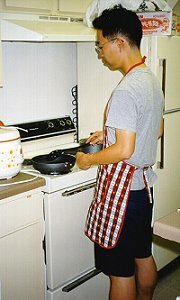
Use electronic appliances. For instance, use a food processor to do your chopping.
Buy prepared foods and convenience items. For example, buy salad mix that is pre-washed and shredded.
Use scissors to open a package instead of tearing it open with your hands.
Ask for groceries in a paper versus a plastic bag. You can carry it between your forearm and hip to avoid straining your hands.
Plan ahead to avoid multiple last-minute tasks when preparing a large meal. Reduce stress on your joints by placing your mixing bowl on a damp cloth in the sink while you stir. The cloth will keep the bowl from slipping, and holding the spoon like a dagger takes stress off your hands. Use nonstick sprays, foil and disposable baking pans to make cleaning up easier. Use a cart with wheels to move heavy items from one place to another.
Back to Top
Around the house
Organize closets and cabinets so that the heavy and most frequently used objects are easy to reach - between the middle of your thigh and shoulder.
Insert a dish towel in drawer or door handles to make them easier to pull open. Leave your most frequently used items out on the counter in the kitchen and bathroom and on your dresser in the bedroom. Limit yourself to one major cleaning task a day.
Back to Top
Outside
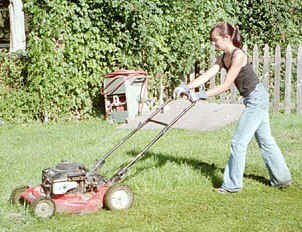
Gather your tools together in a wheelbarrow, so you're not making several trips back and forth. Use tools that are going to minimize stress on your joints. Examples are ergonomic rakes and shovels. Tape yardsticks onto your gardening utensils, so you won't have to bend over as low to use them.Put pipe insulation tubing around tool handles to make them easier to hold.
Leave the hose in the yard instead of dragging it out of storage each time you use it. Put a chair at each end of a garden row. It will help you get up from the ground. Do your gardening in small containers that you can keep at an accessible level or use raised beds.
Weed after it rains or the garden has been watered - soft soil means less tugging.
Back to Top
Designed, developed and owned by The Fibromyalgia Community, a CSSA Partner, (a 501(c)3 non-profit corporation) maintained by Chip Davis and Jane Kohler The Fibromyalgia Community website is a privately owned site. Copyright (C) 2004 The Fibromyalgia Community. All Rights Reserved. Page Updated: February 05, 2009 Health Information Disclaimer
|